
What is an SSL VPN?
An SSL VPN gives staff remote access using the same encryption that protects secure websites. Because it looks like ordinary web traffic, it connects from almost any network, including hotels and guest Wi-Fi.
See our VPN services Talk to an engineer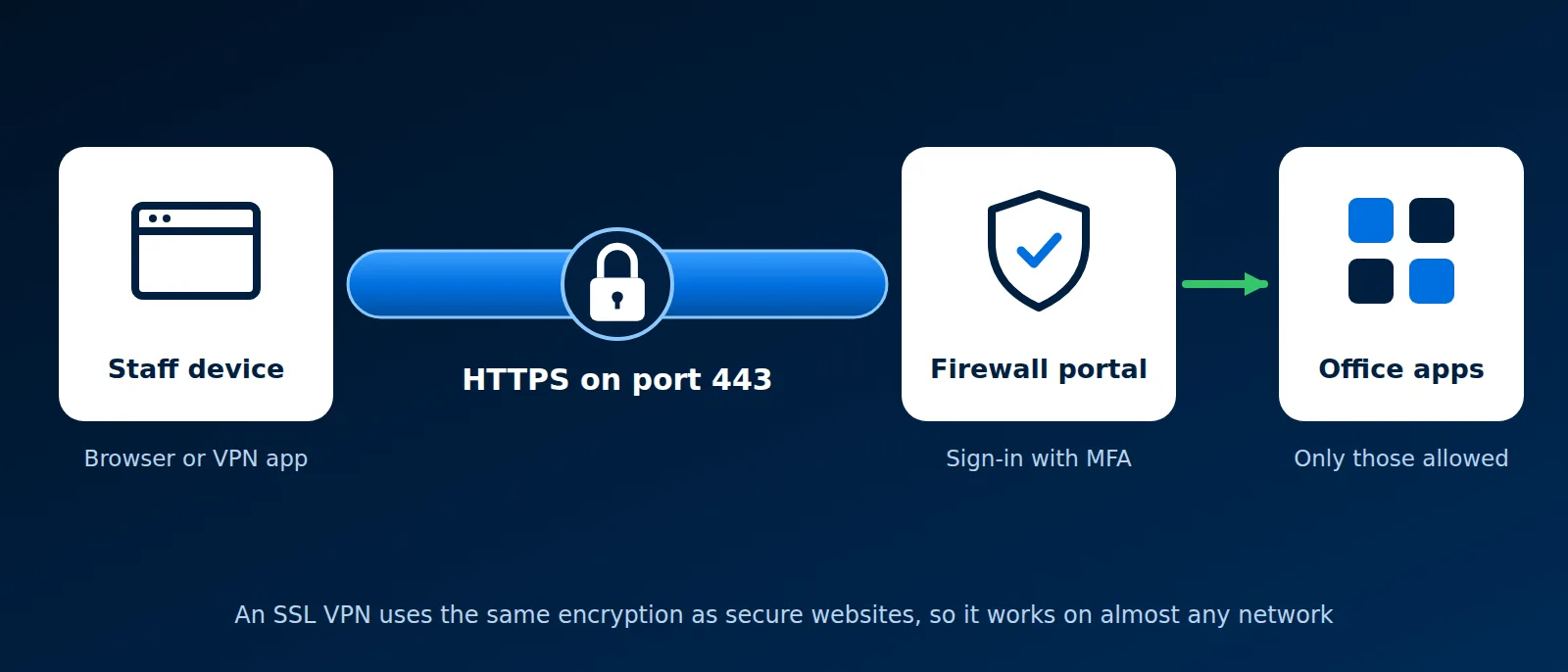
What it is
The name comes from SSL, the older name for TLS, the encryption behind HTTPS. A user connects to a portal on the office firewall, signs in, and is either given a browser page with links to internal apps or a full tunnel through a small client app. Most run on port 443, the same port as secure websites, which is why networks rarely block them.
OpenVPN is the best-known open source SSL VPN. Firewall makers such as Fortinet and Cisco sell their own. For the wider idea, see VPN.
Why it matters to a business
- Connects from anywhere: traffic on port 443 gets through most firewalls and public networks.
- Per-user control: each person signs in with their own account and a second factor, and access can be limited to certain apps.
- Keep it patched: because the portal faces the internet, attackers look for weaknesses in it. Several vendor SSL VPN portals have had serious flaws, so updates must be applied quickly and multi-factor sign-in always required.
- Alternatives: Tailscale and WireGuard avoid a public sign-in portal altogether.
How this shows up in our work
When a client wants remote access to run on the firewall, we set up OpenVPN on OPNsense with certificates and multi-factor sign-in. When we take over a firewall with a vendor SSL VPN, we update it, review who has accounts, and often move staff to Tailscale so no portal is left exposed. Our VPN services page compares the options.
Related services
VPN services
Remote access with OpenVPN, WireGuard and Tailscale.
Network security
Firewall review, patching and sign-in controls.
Managed IT
Accounts added and removed as staff change.
Learn more
- Virtual private network on WikipediaExplains the main VPN types, including TLS-based remote access, and how they compare.
- Transport Layer Security on WikipediaThe encryption an SSL VPN relies on, and why SSL is now called TLS.
- CISA Known Exploited VulnerabilitiesThe US government list of flaws attackers are using right now; search it for your VPN vendor.
Related guides
SSL certificatesOpenVPNFortinetCiscoVPNMulti-factor authentication (MFA)TailscaleWireGuard
Is your VPN portal up to date?
Tell us which firewall and VPN you run. We will check it and recommend what to keep or replace.
Start a conversation